Showing posts with label the oc. Show all posts

Sunday, September 14, 2008

IX: OMG GG


After undertaking to re-watch the first season of The OCsuch that I could write essays by the episode, a curious thing happened: I couldn't stop watching. The same vortex that ensnared me on its premiere had me again. This isn't to say that I've stopped - far from it - but to explain my curiously intertwined absence.

Gossip Girl is the sort of cultural phenomenon that can escape one entirely if they don't own a television and aren't plugged into the right circles. I know this because it happened to me. When I woke up one morning to find my days filled with blog subscriptions instead of my second job, I found a world with a show so popular it has its own tag on Gawker. And here I thought I was still with it?

Whereas Josh Schwarz's previous project, The OC came at the beginning of the TV revolution - DVR was a distinctly luxury item and streaming piracy was naught but a twinkle in the eyes of the college students who scoured the torrents for Canadian Television rips of network shows - GG arrived into a world whose television viewers were in control. Apart from this, and its meager challenge to the final season of The Wire for the title of "Cultural Item of Note: 2007-2008 Television Season Category," I can think of no other reason why Gossip Girl did not reach the pan-cultural, iconic status of The OC. Not only is it practically the same show, but it arrived in a culture even so status obsessed that it can sustain The Hills and an American edition of the British OK tabloid.


Gossip Girl is, in its essence, the refinement of The OC. A comparison less on its tastes, sentiments, or even a coastal rivalry, GG is Schwarz distilling the same plots, the same themes, and even some of the same characters through the filters of network lessons learned and East Coast location filming.

In his new series, Schwarz has matured not just in his style, but also in his content. In Episode 9, "The Heights," The OC is at its high school soap opera best. Even with its B-Plot of the Balboa Wetlands development project, it is a John Hughes movie writ television. The tomboyish friend who helps her guy friend crush get the other girl, the missed connections that nearly tear apart the nascent star-crossed teenage romance, the showdown on the soccer field where Ryan tackles his nemesis because he thinks Luke is still after his girl! In this episode, and indeed much of that which redeems the series, the is high school, or at least its cultural simulacrum. Distorted, Technicolor, glossed, and exaggerated but not so impossible as to take it completely out of the sphere of the shared experience.

Gossip Girl owes no allegiance to your petty nostalgia. Insomuch as school exists, it is purposeful background to absurd shenanigans. Sure, in Orange County there was the USC obsession, but in the Upper East Side the Ivy League application process involves courting your author/idol and outing your best friend as a recovering alcoholic. And if you're not at that school, you're a home-schooled filmmaker. Or whatever it is that Vanessa does when she's not turning Rufus's gallery into a cafe.

The OC thrived on contrivance. Characters drawn deep enough to like and shallow enough to turn the plot on the dime, wildly unlikable personas cast as unlikely heroes, aspirational locations and people and products. And though I'd be lying if I said GG weren't possessed of these same flaws, I'd be no less dishonest if I didn't admit it I loved it. In part for the same reasons that I got caught up in The OC in the first place, but also because GG, for all its flaws, seems- at least on first watching- to dig a little bit deeper for its story lines. Little J's pyrrhic war with Blair, Dan and Serena's romance, Rufus's tragi-comic love life. Though these stories on occasion fall victim to television's peculiar coincidences, they're driven by characters that both define and are defined by their experiences.

And it's not that Gossip Girl didn't open the second season with a bizarre series of wildly unlikely and unfortunate events that all led up to one wonderfully salacious payoff. But at least when GG does bad, it does bad incredibly well.

Click here to read more.....

Monday, August 4, 2008

VIII: The Chief Administration of Corrective Labor Camps and Colonies

Some may consider it an abomination to even mention Alexander Solzhenitsyn in the same breath as The OC. However, it is in the same way that we owe Kafka the psychological referent for the nightmare of the bureaucratic state that we owe Solzhenitsyn for the visceral emotional referents of the autocratic regime. In America, we thankfully live far from the Soviet reign of terror, but The Gulag Archipelago is rife with reminders that the distance has been growing narrower at an alarming rate. The lack of recourse to the rule of law, the coercive interrogation techniques, the use of the legal system for political ends, the uncertainty.

When Episode 8 finds Julie Cooper attempting to relegate Marissa to an institution, without the consent of her father, we find her in a situation that is physically entirely dissimilar from that of Ivan Denisovich. For one thing, Southern California is much warmer. But for another, when we are supposed to assume adolescence for everything and we are supposed to accept Julie Cooper as a scheming dictator, we can see something closer. Solzhenitsyn's lessons may have been meant for his people, and may even have been meant as specific warnings against the dangers of the Soviet state, but their significance goes much further. In his writings under threat of destruction, imprisonment, and death, Solzhenitsyn's stories of the terror and absurdity and incoherence and danger of a totalitarian state bent on the preservation of power for its own sake stand as a warning against all malfeasance and corruption within the status quo. It is naive folly to say that either power or government is intrinsically malevolent, but it is thanks to writers like Solzhenitsyn that we will always have the memory of just how far astray either can go such that we may stay far from such paths.

Click here to read more.....

Wednesday, July 30, 2008

VII: Tijuana Hangover

Now think about what this band could sound like on their first full length. Think about what it could sound like when they tighten up the beats and make the arrangements go somewhere, but keep the fun and the energy. Think about what it will sound like when you’re pushing those nifty bass lines through something other than your computer speakers. And think what will happen when that bass player realizes he can play half the notes and be twice as awesome. Pretty sweet, right? (10/08/07)


At Indefinite Articles, the writers undertake Preemptive Strikes, a category of posts subtitled: "Movies we haven't seen, books we haven't read, games we haven't played." Their Long Hauls tackle bodies of work as varied as Highlander, Star Trek: TOS, Doug, and Metal Gear Solid. Writing this as I am under the marque of my series of a season of a show off the air for nearly five years, I have a certain affinity for this project.

Between these two extremes of criticism, lies the status quo of the blogosphere. With neither the willingness to admit to their preconceptions nor the reflection of posterity, the electronically chattering class hops to keyboards as quickly as possible to register its opinions on whatever movie or record crosses their path. Now that "the scoop" is had by hitting post as quickly as possible, one needs only get a link to an mp3 and the critical equivalent of "OMG FRIST!" to claim blog supremacy. Beware quality; that way outdated timestamps lay.

Thus, we have the cycle of buzz: a band exists, gains exposure and then hits critical mass. Immediately, there is a spike in the blogosphere's attention before the only one's inquiring are the one's who care about the music. The brown dwarf that remains after a buzz band's rise to glory.


It was after just such supernova that I first looked at the Black Kids. It was October and I was hopeful. Going back and listening to Wizard of Ahhhhs, I can't help but feel it still. Listening to "Hit the Heartbreaks" the mugginess that pulls the voices together and makes a frenzy of the synthesizers and teenaged voices may not sound professional, but it lent them an urgency more compelling than most punk bands.

On Partie Traumatic, The Black Kids lose this along with much of what made them so special. One of the difficulties in listening to a band that cleans up its sound having finally gained access to professional studio, gear, and production assistance is trying to disentangle one's own ideal images from what the artists envisioned. When the Mountain Goats left the lo-fi era for the 4AD era, they picked up a slew of fans but left a few at the onramp wondering what happened to the songwriter who they'd associated with their own militantly lo-fi ethos. The Goats were of course a curious example in that they eventually picked back up many of those fans, but were also notable in that the tidal shift in their music was one of style and not one of quality. The Black Kids could hardly blame the failures of Ahhhs on a broken boombox: Partie Traumatic sounds remarkably similar apart from brighter synthesizers, better vocal tracking, a bevy of overdubs, and a generally more busy soundscape.


Perhaps these things are a matter of taste, but compare - if you can - the first three seconds of the two versions of "I'm Not Gonna Teach Your Boyfriend How To Dance With You." In those three seconds, you have the beginnings of all the problems with the sound of this album. For all the band's failures, restraint was hardly one of them but it only worsened in the studio. The original version could admittedly be recorded more cleanly, but its reverb drenched solo guitar succinctly declares the hook and allows plenty of space into which the band can drop. The new one brightens the tone almost to distraction and leads off by scratching the rhythm before a second, almost identical sounding, guitar comes in to clutter up the track even more. The rest of the track feels like a clinical exercise. The backing vocals are sometimes separated out so far that the shouts seem like they're coming from a different room and the hyperactive bassline from the original still hasn't quite found a groove.

Partie Traumatic isn't all bad, and it certainly deserves more consideration than Pitchfork saw fit to give it. At its best, it's an incredibly accessible dance record that has all the inviting post-punk cues that made them the darlings of the blogosphere in the first place. The musicianship is consistently stronger, and the lead vocals are much stronger than before even if the weakness of the backup vocals (more the parts than the voices) is made awkwardly obvious by the brighter production.

Despite its high points, The Black Kids had little hope of recapturing our imaginations with this album. Even were it to have equalled Wizard of Ahhhs, we would have been left wanting because so much of what we loved in it was unrealized potential. To see them here - a record deal, a record - and but no closer to finding the next gear, is perhaps the biggest disappointment in listening to the album.

Still, we should probably be honest with ourselves: where could they have gone? We wanted to believe that their irresistibility would translate into something more and that they could be more than the sum of their influences. But what cause did we have? When Marissa Cooper got in the Cohen's Land Rover to drive down to Tijuana for the weekend on the heels of all her chaos, did we really expect anything else but for her to end up drinking alone in a sketchy bar before overdosing on pills? Nine times out of ten the dancey 80's revival band will remain just that, and just as frequently the poor little rich girl will mix Cuervo and codeine. When the surprises happen, they're brilliant. A glimmer of redemption for Marissa, Turn on the Bright Lights for the hopeful.

Click here to read more.....

Tuesday, July 29, 2008

VI: Misses and Kisses


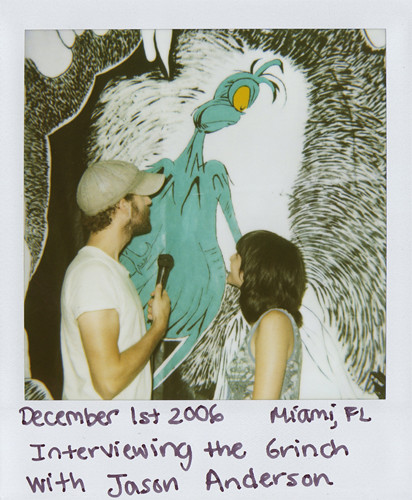
If sincerity is the new irony, Jason Anderson may be the new Nerf Herder. His songwriting takes the high points of Bruce Springsteen, Against Me!, and the Weakerthans and occasionally swirls it together with an unabashed appreciation for the howling choruses, soaring guitar solos, and ostentatious piano that make people love the 1980s despite its myriad failures as a decade.


Drama can hook an audience with any of a thousand lures, but the most irresistable are those that speak to our common experiences. On the surface, the most alluring are the ones that titillate and excite, but these can rarely sustain. Celebrity gossip rags kept a steady business, but it took Us Weekly's concept of photoessays and stories that concoct a shared reality of Hollywood starlets and the shoppers in Aisle 5 to make American celebrity culture inescapable.

The OC plays on the same tropes: drawing the viewer in with the aspirational visuals and trying to trick its audience into establishing a sympathy with the all-too-similar problems of its characters. Alcoholism, outsiders, marital issues, and, of course, love in the time of home rooms and hormones. However much the show concerns itself with teen romance, it never wholly succeeds in the telling the romances in which it seems so invested.

At the opposite end of the success spectrum, is Judd Apatow's Freaks and Geeks. Where The OC thrives on the melodrama of the extraordinary, Freaks basks in the stunning awkwardness of the everyday. Though each show has its archetypal nerd, their lives could be no more different. Seth is smart, tall, funny, unconventionally cute, and has zero friends or acquaintances despite having lived in the same place for a decade. Sam is short, awkward, and always accompanied by his only two friends on the planet. Seth Cohen might be confronted with preposterously imaginary choice between a bombshell in a Wonder Woman costume and an impossibly cute girl who drew him a personal comic book, but Sam Weir pines after the cheerleader and wins her heart by a season's worth of luck. Fine, Apatow may require the fairy dust of television for his character's chances, but that's as much use as he makes of it. Even though Sam gets the girl, he realizes that the girl he dreamed of dating isn't actually the girl that he wants to be dating, leading him to the far more interesting questions of where one goes after attaining all one's adolescent dreams, and as an adolescent no less, and shortly thereafter realizing that they're hollow.

The reason why Freaks and Geeks is such an infinitely more affecting show, and the reason why it still sits on Blockbuster's shelves while The OC has been consigned to the scrap heap, is that even though it strains credulity to believe that Cindy Sanders would deign to date Sam Weir, we can understand why she makes that decision. When the supposedly slutty Summer is revealed as a virgin, it's a shock, but not altogether mind boggling because we know so little about her. She chats with Marissa occasionally, but turned down Luke once, but that's about all we know. Cindy Sanders, by contrast, has gone through an epic romance with Todd Schellinger


Apatow's retellings of the trials and tribulations of high school romance are hardly flawless, but they're closer to most realities than The OC ever is, not that any portrayal could capture the reality of those moments - where Summer grabs Seth for the kiss at the close of Episode 6, or Sam and Cindy sit on the bed at the make out party at the close of "Smooching and Mooching" - but the closest might be the previously mentioned Jason Anderson.

With a photographic gift for imagery, Jason Anderson is one of the most refreshing songwriters around - someone who doesn't need to hind behind the irony or dismissiveness that has become de rigeur among most songwriters who seem afraid to let on that they care. Not only does he clearly, but he makes you feel like you should, too, regardless of what he's singing about. At his best, he paints pictures that, for all their exquisite detail, are expansive and universal in their emotion. "Watch Your Step," from 2008's The Hopeful and the Unafraid is one of those songs. In it, he manages to capture everything that inspires wonder and terror in first kisses, with a melody that's inescapable and a production that seems ripped from 1986. And all this before hitting the first chorus.

When Seth kissed Summer, we cheered. But it was a strange victory because it was so clearly insignificant - she quickly excused herself to talk to a banker, after all. When Sam Weir asks to kiss Cindy Sanders, we're rooting for him and grimacing at the same time, as we enjoy one of the most awkward television moments this side of Curb Your Enthusiasm. But more than that, we feel for Sam - his satisfaction when he finally does kiss her, and the nervous fear as she pounces on him to make with the necking. With Sam, we feel it because we were there, especially if we were more than a little bit Sam Weir at one point or another in our lives. But with Jason Anderson, we feel it because it's all of our lives.

Jason Anderson - Watch Your Step
- MySpace
- Order from K Records
- Order from iTunes


Click here to read more.....

Monday, July 21, 2008

V: On Rights


In light of the recent Supreme Court decision, we bring you the climactic scene of Episode 5 as imagined by advocates of individual gun rights

"What was that, Abercrombie?" Donnie yells, pulling his gat. Donnie broods and glares, because that's what one does when one is from the wrong side of the Orange County-Riverside border. He stares down Luke, raising his .357 at the All-American water-polo captain ten paces across the room, waiting for an answer.

Luke reaches around to the back of his designer board shorts, feeling for his piece, when his cocksure stare melts like a lonely Balboa Bar abandoned on the pier at noon.

"Jesus, Luke, do you never do anything right?" a soused Marissa Cooper contributes to the conversation, pulling a 9mm Beretta from the gun compartment of her matching Gucci handbag. "Drop the gun Donnie." Her words turn stern, but her hand can't quite hold the authority, or the straight line.

Seeing his star-crossed love interest once again as a distressed object that could only be saved by his actions, Ryan quickly switches from Brood to Break and pulls his own gun from the signature holster that he wears across his signature wife beater. In Newport, everyone packs heat, but in Chino, everyone lets everyone else know it. Because they gots to represent.

Ryan steadies himself behind the bar; Donny is the only obstacle between he and Luke. Luke is all that stands between Donny and the glass door. The bottle of Skyy was the only line between Marissa and a good night, but she broke through that line.

The Natty Ice is thick on Donny's breath, or as thick as Natty Ice can be. He didn't come here looking for a gunfight. A fight, sure. And yeah, he pulled the first piece of iron, but when it's 1am and you're eight beers and fifty Newporters deep into a party, sometimes these things like a good idea. It doesn't? Well, you're not the one with a gun. God bless the USA.

"What's going on?" Holly walks down the stairs, stumbling up next to Ryan with a comically over-sized shotgun that she must have taken from under her parents' bed from a box labeled "Use in the Event of the Apocalypse or a Democratic Administration." Donnie turns his head to look behind him, keeping his gun ahead on Luke, to see Holly aim the shotgun and almost tip over.

Ryan lowers his weapon and steadies Holly, taking the shotgun from her hands in the process. "You have acquired: The Shotgun" Seth Cohen remarks in his videogame announcer voice. Later, Summer would ask him why he doesn't pack heat. "Summer, my witty banter is all the heat I need." He would die in a gang shoot out on the pier two days later.

As Ryan, is holstering his Colt 45, the glass door slides open. It's Donny's friends. Blustering but without weapons drawn, they burst into the room, "What the hell is going on here Donny? Is this chump bothering-"

But that's as far as he gets, because Marissa's drunkenly itchy trigger finger freaked out and put a slug into Corona Hoodlum #1's shoulder. Immediately, Donny turns to his right and exacts vengeance, cutting a full three seasons out of the life of the show. Luke, in a fit of rage, runs to tackle Donny, because that's what Cro Magnon Man did, but Ryan had already aimed the shotgun at where Donny's chest would have been. Where Luke's head was.

All the while Corona Hoodlum #2 was pulling his sholem, an M-16 that he keeps strapped to his back. Because, you know, there's an inalienable individual right to carry guns. For the protection of a free state. This is our well regulated state militia.

Click here to read more.....

Friday, July 18, 2008

III-IV: Collars

It is entirely coincidental that the posting of the third installment of the series coincided with the conviction, without jail time, of Lee Kun-Hee, former Chairman of Samsung Group. Not that his sentence is big news; such occurrences have become commonplace.

Having cast off the shackles of their colonial oppressors and defined the framework of a free state, our country's landed white forefathers set their sights on the next great set of legal challenges facing an ever-westward expanding America. Willard Hurst's "Law and the Conditions of Freedom" presents the development of legal institutions in 19th century America that a cynic may see concerned as much with promoting a climate conducive to the development of enterprise as the rule of law. In fact, if the latter was a goal, it was perhaps worthwhile only in service of the former. And so the law of torts, of contracts, and of property were developed to help the entrepreneurial souls of these United States fulfill the potential of the land they saw before them. Pristine and uninhabited... though only described by the former prior to being placed in the thrall of industrialization, and only noted as the latter for ignorance or disregard of multitudes of Native Americans. But, yeah, go west, young man!


Episode three of The OC throws the contemporary viewer into a swirl of reference, and a sensation of pop cultural vertigo. Ryan's nemesis is none other than Francis Capra (Eli "Weevil" Navarro) from Veronica Mars, who lays the crime/prison drama hurt on young Mr. Atwood in the form of a fork to the neck. If the wound looks a bit like a vampire bite, you can blame the writer: Buffy expatriate Jane Espensen (Band Candy). The "crime": Ryan is unable to be released to a guardian after being held for questioning in the fire that consumed the Newport Group's latest model home.

Episode four of the series closes with what everyone enjoys the show for most: rash, poorly thought out decisions which cut a clear and tantalizing path to high melodrama. In this case, we have the confluence of Jimmy Cooper's embezzlement of his client's money to pay for his family's lavish lifestyle combined with his total unwillingness to confront his problems directly... until the social event of the year when one of his clients would like a check for his at-this-point embezzled money. Never mind that he could have not shown up, or simply written a bad check considering he was already hemorrhaging cash and looking at 20 years in the joint, but no, he was going to own up to it.


There's been plenty of ink spilled on the place of law in society, whether it has played such a consciously mustache-twirling capitalist role as Hurst portrays and critics of capitalism would accuse, and whether such roles can be normatively categorized for good or for ill. Not only have I yet to even begin my legal education, but these questions go far deeper than a few hundred words in a blog post on a tv show. Still, it's admirable that a primetime high school soap points out what should be obvious and inescapable: that it's all too rare that white collar criminals have to roll the hard eight, and it's far too often that the disadvantaged find themselves on the losing side of the craps game that our legal system can sometimes be.

In abstract terms, we believe justice should be meted out equally - a thief should be treated as a thief. In specific terms, we are willing to carve out exceptions in the name of circumstance and familiarity. But in between, our conception of justice has become so warped that the prospect of a white collar criminal serving jail time is almost impossible to comprehend. Since 2003, we've made steps: but they're more punchlines than warnings. Martha Stewart, Scooter Libby, Enron Executives? But by and large, it is far easier to sell America on jailing a man for life for stealing a few video tapes than it is to sell them on defrauding the country and taking its citizenry for millions. After all, if 3 strikes work for baseball, it must work for the criminal justice system.

Perhaps this means that Hurst was wrong - if our legal system has engendered bad business practices, can it really be said that is the course on which it sought to set us? Perhaps the country lost its way, and the protection of markets and enterprise was gradually replaced by the zealous guarding of entrenched monopolies and corrupt actors? Maybe those old, propertied white men had a point when they were focusing on preventing bad people from doing bad things to take advantage of good people, just expanding that notion to business as well as government.

Click here to read more.....

Thursday, July 10, 2008

II: The Greatest Song That Ever Lived

As these pieces were written sequentially, the show's most greivous use of this song was not mentioned in the original draft. Watching the series finale, one is left to wonder if there will ever be a new universal dramatic shibboleth in the vein of the Buckley cover. We can only hope it will be "The Greatest Man That Ever Lived," from Weezer's Red album.


"Jeff is the son of cult songwriter Tim Buckley
Jeff's Song "the last goobye was udesd in the movie vanilla sky
Jeff was born on noember 17, 1966 in Orange County, California."

- Music Guide Subtitles, Episode 2 of Season 1, The OC

These are the optional subtitles that appear while Jeff Buckley's "Hallelujah" plays in the moments prior to the fiery climax of the second episode of the series - when Marissa Cooper walks into the model home in which Ryan Atwood is living, throws herself at him, only to have herself turned down in what is either the most emotionally mature decision by a sixteen year old juvenile delinquent or what would be the stupidest decision of any man's life. These are also perhaps the stupidest facts to include while this song is playing.

For starters, the song is not a Buckley original, but a cover of a Leonard Cohen song: a fact that has been common knowledge as the track has been used ad naseum by TV producers since they seemingly discovered the track. Perhaps this history also bears mention, in that the the OC is blazing a trail cut by dozens of pioneers before them, most of which also dropped the dramatic ball with their use of the song. There are also the more charitable facts to include: Buckley described his Orange County roots in a Raygun interview as "rootless trailer trash," a characterization which would make Marissa's introductory line, "this song reminds me of you," a bit more sensical. Of course, it would also risk problematizing the concept of the OC as universally perfect and hazard the very premise of the show.

Perhaps the show isn't premised in such an inviolable perfection of the county, but it does (at least at this stage) rely on defining issues of class along distinctly geographic lines. While the OC doesn't deny that there are problems with class in America, it says that these problems are ones of The Riverside County. Perhaps even more importantly, they are ones that come when the Riverside, and the LA, meet the OC, as happens when Seth goes to the LBC in the third episode, only to have his mom's Range Rover tore up. As long as Ryan were to have stayed in Chino, things may not have been great for him, but he could have maintained his path without much interference, aberration of the carjacking aside.

The other tidbit about Buckley the producers neglect to mention in their three point summary is perhaps the most tragic, and the most widely known -- which makes its absence all the more conspicuous. Jeff Buckley died in Memphis, drowning in the Wolf River Tributary of the Mississippi River. Fully clothed, wearing his boots, and singing Zep's "Whole Lotta Love," the thirty year old swam out and disappeared from sight. Maybe this is to what Marissa's enigmatic line was referring, but such subtext is way too good for this show.

Or consider this explanation: Marissa attempts suicide in a swirl of emotions brought on by her parents divorce, her ill-fated romance with Luke, and her then un-requited love for Ryan, by whom she is reminded of this song. Fall Out Boy named the song "Hum Hallelujah" after the Jeff Buckley cover since it was playing in Pete Wentz's car when he attempted suicide. Pete Wentz parlayed the commercial success of Fall Out Boy into the creation of a personal brand that has evangelized the aesthetics of the contemporary wave of emo-punk -- or mall-emo; emo; pop-punk; deriviative, uninventive and misogynistic crap; whatever you choose to call it. The OC turned its position as a cultural arbiter into a venue for the first bridgings of "indie" and "mainstream" culture from the perspective of the mainstream. That is to say, while underground scenes have cried cooptation for decades, and have broken to varying degrees (hip-hop, new-wave), it was the advent of the OC that started the groundswell of mainstream journalistic consensus that indie was " in" beyond the post-Nirvana search for suitable college radio acts. Now, indie was in because it was indie.

Perhaps, Marissa Cooper is foreshadowing her eventual role in the cultural landscape. Perhaps Marissa Cooper is Pete Wentz.

Click here to read more.....

Tuesday, July 8, 2008

I: Forward, Into the Breach

We Shouldn't Be Here.jpg

Inspired by timing, geography, and our friends, what follows is the first in a series.

Phantom Planet first skyrocketed to fame on the identity of their drummer, Wes Anderson's beloved Jason Schwartzman. One of the bands to synthesize LA club buzz with nationwide nerd appreciation on the heels of Rushmore, countless records were sold into the hands of fans soon to be disappointed with the workmanlike attempt to crib the Attractions without the dynamism of Elvis Costello. That is, of course, but for the lead single: California.

The song was released in November of 2002, but hit the bigtime after McG picked it as the theme song to Fox's summer premiere blockbuster series, The OC. For the first episode, it is a transition piece, playing as Ryan moves from Chino to Newport Beach. The carefree, echoing track starts as he packs his bag, fleeing his mom and abusive step father, and futilely seeks refuge with friends. Pulling his public defender's card from his pocket and sticking it in his mouth, not unintentionally like a cigarette, Sandy Cohen arrives once more as the savior in an incongruous black BMW.

For all of Phantom Planet's faults, and all the qualms one can have with a pop song, this track is a fantastic piece of work. The piano and guitar build a surprisingly solid base until the drums come in with a casually powerful backbeat under the second verse, and the the chorus is among the best reasons why stereos were put in cars and roads were built down the California coast.

But the 101 doesn't go from Chino to Newport, and that isn't even the biggest problem here. "California" is a song about coming back, and the OC is a show about being anywhere but. Despite any overtures toward similarity and common human experience, it is a show driven by conflicts bred by difference. "Welcome to the OC, Bitch."


It used to be that residents of Orange County, CA would describe their origins to foreigners by some combination of landmarks. Los Angeles, Disney Land, San Diego, Not in Florida. This show had the remarkable effect of putting a place on the map, no disrepect to Colin and Jack. From here on out, the response to identifying your origins behind the Orange Curtain was no longer, "Where's Orange County?" but "Do you know Seth and Summer?"

That isn't exaggeration. I've been asked a variant of that query on multiple occasions: by Brits, Irish, Spaniards, Thais, Serbs, Tenesseans. Mostly with the same wink and self-aware smirk that belies the stupidity of the question, but with the question nonetheless.

We are nearly five years from the premiere of the Oc. A show that began the shift toward the year-round prime-time premiere scheduling, but that couldn't stop the onslaught of reality-television on the networks. A show that forever altered the self-perceived and therefore only reality of the place in which I lived for eighteen years. A show that today isn't even carried in my hometown's Blockbuster. A show that is perhaps due for a critical reevaluation, or perhaps one that can occupy me for twenty seven episodes and two months before I start law school.

Click here to read more.....