Showing posts with label The Immortals. Show all posts

Tuesday, September 14, 2010

The Immortals List: #100-#81 Recap

Can you believe it, guys? It seems like we only just began our trip through Rolling Stone's list of "The Immortals", doesn't it?

Oh, right.

Fuck it, we're TWENTY entries in! Whoo!

When the once-illustrious publication in question chose, seemingly at random, the years 1953 as the moment that rock music "began", the list of artists chosen from the time period since was generally enjoyed as non-controversial nostalgia, and nothing that people would really get up in arms about. But if my trip through some of the greats (and some of the horrific misfires) has taught me anything, it's that...

Umm... Wait, what did we take from these legendary artists?

Shall we re-cap?

Beginning at the ending:

#100 - Lee “Scratch” Perry: Makes being high in Jamaica sound fucking awesome. Which, you know, it probably is.

#99 - Curtis Mayfield: Makes being an unheralded genius in a tumultuous era sound fucking awesome.

#98 - Roxy Music: Makes being really, really English sound fucking awesome.

#97 - Diana Ross and the Supremes: Makes being “kept” by Berry Gordy sound fucking awesome.

#96 - Martha and the Vandellas: Makes being a girl group sound fucking awesome and sort of noble.

#95 - Lynyrd Skynyrd: Makes being “Southern” sound fucking awesome. (This is the highest praise I have ever or will ever give this band.)

#94 - Nine Inch Nails: Makes being Trent Reznor sound fucking awesome. I guess.

#93 - Booker T. And The MGs: Makes being “Southern” sound way more fucking awesome than Lynyrd Skynyrd does. Because FUCK YOU, Lynyrd Skynyrd!

#92 - Guns N’ Roses: Makes the reasons that we know Los Angeles isn’t fucking awesome sound fucking awesome.

#91 - Ricky Nelson: Makes being a posthumously-appreciated child star sound fucking awesome.

#90 - Carlos Santana: Makes getting some Mexican food sound fucking awesome. Hey, you wanna go get some Mexican food?

#89 - The Yardbirds: Makes being capable of more sound fucking awesome.

#88 - Miles Davis: Makes being over the hill and still more interesting than anybody else in the world sound fucking awesome.

#87 - Gram Parsons: Makes being a trustafarian sound fucking awesome.

#86 - 2Pac Shakur: Makes dying young sound fucking awesome.

#85 - Black Sabbath: Makes faeries and mental instability sound fucking METAL.

#84 - James Taylor: Sucks.

#83 - N.W.A: Makes the 90s sound fucking awesome.

#82 - Eminem: Makes the early 2000s sound fucking awesome.

#81 - The Drifters: Makes being

Click here to read more.....

Saturday, September 11, 2010

The Immortals #81 - The Drifters


It goes like this: Brian Wilson heard "Be My Baby" ringing in his ears as he composed his teenage symphonies to God, and Phil Spector heard The Drifters when he composed "Be My Baby"...

The Drifters weren't necessarily the best of the early R&B groups, not any more than the Ronettes were the greatest of Spector's stable of "pet" production projects (The Crystals and especially Darlene Love spring to mind there), but they definitely deserve credit as largely responsible for their era's advancement of black American music into the dominant popular form of 20th century. Though the charts were littered with pop vocal groups in the 1950s, the Drifters' evolution of straightforward doo-wop into full-fledged orchestrations and overwhelming success and popularity influenced artists across many genres as that decade gave way to the 1960s.

There would arguably be no Wall of Sound without the Drifters', who also happened to serve as the penultimate production vehicle of Jerry Leiber and Mike Stoller (whose shared denial of a place on the Immortals list is borderline criminal). There would also be no Motown without the blueprint set by Leiber and Stoller's efforts with the Drifters, which fused pre-soul rhythm and blues to lush pop arrangements, yet still remained, unmistakably, "rock and roll."

Wedding orchestral strings and brass to the fledgling sounds of young R&B hardly seems like a revolutionary act today, but it is also telling that seemingly every genre-of-the-moment now "matures" into replicating exactly that once it becomes sufficiently mainstream today.

Oh, and they might actually have been the best of the early R&B vocal groups to boot. More than enough reason to warrant inclusion on this list.

Click here to read more.....

Friday, August 6, 2010

The Immortals #82 - Eminem

Brace yourself. Because I'm about to make one of those grand, broad, sweeping comparisons between a relatively "young" media figure and one of the most enduring and popular icons in pop culture history. I'm warning you now that if this is the sort of thing that is as nausea-inducing to you as it usually is to me, then here's your chance to skip it now. Might I recommend a visit to www.deadbluesguys.com to peruse the grave sites of many terrific artists who were not featured in Rolling Stone's "Immortals" list? Or maybe one of those websites with the funny cats? Because here, thar be discussion of Eminem. Eminem- hip-hop's answer to...

wait for it...

Elvis Presley.

(Yes, because he's white.)

((Mostly)).

Yeah, it's really that easy. It's, like, All Music Guide easy. So let's get the list out of the way early. Eminem and Elvis are the two highest selling solo artists in their respective genres (not counting 2Pac's sales for the bazillion re-packagings of the same material). Both popularized their genres nearly a decade after their arrival as full-fledged popular phenomena in the "other" America (is it racist to continue the "black people are cool" meme? How about just ahead of the curve then?), and both became the first mega-selling white cultural ambassadors of their respective genres (I'll get to the Beastie Boys and why they're not hip-hop later on down this list).

Both also entered secondary careers as multi-media "threats" who blurred the lines between personal iconography and art, although, for the record, Eminem is a way better actor. And the public issues with substance abuse have been well-documented in the case of both men, as well as their precipitous effect in their declining popularity in eras not far removed from their initial popularity- Elvis because the Comeback Special really only earned him a quicker flight to Vegas residency as rock moved on and people stopped buying his records in favor of newer, more exciting sounds, and Em because 1999 was for-fucking-ever ago and nobody buys CDs of any kind anymore.

Eminem didn't "steal" hip-hop any more than Elvis did rock and roll, but its hard to manage a reason for his inclusion on this list without framing him as some sort of analogue to "The King" (a term used pro forma, believe me). I don't know that anybody was as really influenced by Elvis any more than either the acts he was accused of ripping off or those whom he merely outsold as contemporaries. Sure, he was great for selling the image, but did he add anything so definitively greater than Chuck Berry, Fats Domino, or frankly anybody that also happened to be recording for Sun in 1953? And is there something in "Stan" or "The Real Slim Shady" that's set to ignite a dormant creative spark in some soon-to-be brilliant 'head out there with an unwritten masterpiece that will change everything? I doubt it.

That doesn't mean they're not fun songs, or records like The Marshall Mathers LP don't hold up today. Em is a fine MC, with above average delivery and no worse than average lyricism. And he's from the Midwest. You can really never overstate the benefit of a neutral accent toward one's mainstream appeal. And as a representative of the last golden age of the music video (a form whose relevance fellow NH alumnus Steve and I notably and vastly disagree on) Eminem is a particularly poptent representative of the time and place. Hey, just like Elvis was for television! Look at that! When it rains over-obvious analogies it pours.

Bottom-line: Eminem did for hip-hop the same thing that Elvis did for rock and roll. He brought new heights of popularity to a "dangerous" style of music a good period of time after all the real danger had left it. And because there will never, ever be another 25x platinum-selling rapper, the easy comparison is all we're ever really gonna need to remember him by. That and his records, I guess. But mostly the other thing.

Click here to read more.....

Saturday, July 31, 2010

The Immortals #83 - N.W.A.

Might as well have single-handedly invented the parental advisory sticker. And hey, God bless 'em for it.

Let's start with the obvious good: Eazy is one of the most compelling and charismatic performers of his generation. Ren, Yella and Dre, though seemingly relegated to near side-men status at times, nonetheless make their presence abundantly known in some of the groups most durable and beloved tracks. And here a baby-faced Ice Cube immediately announces himself as a force of nature, absolutely dominating his way through arguably one of the most influential A-sides in hip-hop history (a streak he'd soon continue in his indispensable early solo work).

Still, I'm not positive why Straight Outta Compton is looked-upon as an album quite as highly as it is, though I do have a pet theory that might explain its current status. See, as a child of the 90s (started high school in the fall of '96, class of '00), I remember the decade for being the times when everything updated. With the fall of the Berlin Wall came the fall of the me-me-me! 80s, and a new world order was soon established. Gen X was to become as prominent in the culture as the Boomers had been, and the artistic underground of any number of media was about to define the mainstream, with all the commercial and cache privileges that implied. Yet for all its significance, the 90s had precious few definitive musical texts to represent it. By the time 1996 rolled around, the decade was ready to coast out on an endless parade of faux-grunge, pre-packaged pop, and gangsta-gangsta wannabe redundancy (and sometimes all at the same time!)

Yella and Dre's production isn't really all that flashy, but its proto-West Coast G-thing vibe is enduring, and its high points propel the album's most memorable tracks, but for the most part this is a stepping stone to Dre's more celebrated future efforts. Yet we remember these songs as being elementarily powerful, mostly because we can't seem to disassociate them from images of the larger-than-life place so proudly 'repped in the title that came just a few years later. When the riots rocked South Central in the wake of... well, pretty much everything that N.W.A said was going on in their neighborhood, culminating with the verdict of the Rodney King trial and subsequent boiling-over of the populace into civil unrest, many in the media (as does now, it seems, the gaze of history) looked to the biggest voices in the rap world as prophets who portended it all in their lyrics. We had the troubled times, but lacked a natural soundtrack, until we picked this one.

But even though Straight Outta Compton is maybe best-remembered for it's opening one-two punch and a whole lot of f-bombs, it's hardly that straightforward or politically focused a record.
Public Enemy was called "The Black CNN" because Chuck D's brought the "informed and angry about it" gravitas of a grown-ass man, but the members of N.W.A. exploded into public life at a tender age in their early adulthood. Eazy was 25, but the rest of the group were barely out of their teens- hell, Cube hadn't yet crossed that threshold. Compared to the more legitimately conscious hip-hop in that period, "Straight Outta Compton" and "Fuck tha Police" are less social commentary than an adolescent lashing-out, just raw, juvenile anger. It's the kind of emotion that's hard to muster as an adult with responsibilities like a job to get up for in the morning. Elsewhere, "I Ain't tha 1" and, um, basically everything that comes out of Eazy-E's mouth display sexual politics of a sophistication on par with your average horny 15-year-old boy.

Most of the tracks are slice-of-life grooves about partying, getting laid, and waking up the next day hoping not to get hassled by cops or lesser MCs, liberally coated with lyrical posturing on how much they get laid, party, and fuck up other MCs. In that light, Straight Outta Compton is really sort of underrated as one of the better coming of age albums of its era. And when Cube left the group after its release, it might as well have been the last scene of Stand By Me, with Richard Dreyfuss narrating about how now Ren drives a forklift and Eazy died just six years after that fateful day (and River Phoenix fades away...)

When the PMRC inquisition the music industry to adopt the so-called "Tipper Sticker", it was really only a matter of time before that little black and white warning symbol became the prized badge of entry to new worlds of badass-ness for kids all over America. And the irony of N.W.A now is that in our fervor to indulge the legacy of Straight Outta Compton, we've all become little Tipper Gores ourselves. This music validates our own inner-teenagers, the part of ourselves that needs to remember that time and place as feels most fitting to us now. And so we remember the people who remind us of then in the same way. That's why Straight Outta Compton still feels mostly scary and cool and vital today, even if the 90s as a whole weren't quite as much those things as we might remember them.

Click here to read more.....

Thursday, May 13, 2010

The Immortals #84 - James Taylor

With the his success of ultra-popular, triple-platinum-selling second album, James Taylor became first bonafide superstar that heralded the "singer/songwriter" era, a genre that was differentiated from other music made by people who both wrote and sung their own songs in the early 1970s by its transparent willingness to veer into gratingly self-absorbed and sonically derivative territories. And considering that this was a generation of musicians who were essentially just trying to do bad impressions of Bob Dylan, that's really saying something.

Sweet Baby James is packed with the hallmarks that defined the singer/songwriter tag, as Taylor paints his tracks in broad, bucolic strokes of Americana gleaned from the country and folk of in the previous decade, and polishes them to a high gloss of mellifluousness that consistently overwhelms those barely-there moments that hint of intelligence and even a faintly dark sense of humor contained within them. In places, it's exceptionally easy to hear the title track, or "Blossom", or the iconic "Fire and Rain" and find them perfectly pleasant for what they are, which is "perfectly pleasant", I guess. But much of this album is devoted to the perfunctory task of keeping appearances of depth, be they in the shamefully thin "character study" of "Sunny Skies" or a similarly de rigueur attempt at "interpreting" the American songbook, such as with Stephen Forster's staple/chestnut "Oh! Susanna" (you know, because James was down with the whole folkie-thing.)

Which I guess begs the question of just how "good" these songs even needed to be in the first place. The "singer/songwriter" was a pop designation, and folks like Taylor were simply trying to make a name for themselves in the industry with nice songs that people liked to listen to. There's an honesty there, sure. If there wasn't, how could it so often veer into the irritating level of insistent sincerity that we so often associate with the "guy with a guitar?" And much of the music produced by Taylor and his contemporaries (or, as I'd argue, his betters) such as Joni Mitchell, Jackson Browne, Cat Stevens, and Carole King was truly beautiful, and even sometimes deeply affecting. And hey, if selling records with a nice ditty was really the only goal he had, then Taylor was as successful a performer as anybody could possibly become by that measure.

But still, there's a lot that's missing from Dylan's influence in Taylor and the seemingly endless parade of singer/songwriters who followed his example. Dylan's was a wicked wit and he was a truly inveterate bastard, and when he turned his ire toward a subject of personal scorn (especially himself) he'd waste not one syllable in the course of intellectually and emotionally eviscerating both it and the listener. And when he stole your song, it was to show us something about where we came from and why we're here now- and at least he had the integrity to admit so outright.

A few singer/songwriters who embodied Dylan's ethos and made tremendous records (I'm thinking of Randy Newman here, who's a goddamned national treasure as far as I'm concerned), but the majority of those who followed him never even tried. James Taylor never had any illusions that he could ever be so vital, ever matter that much. At least he was as forthright as Dylan was when addressing that particular fact. In an interview with Charlie Rose in 2000, he admitted:

I've taken no more risk than I absolutely had to. I'm not changing the world, and I don't have anything to prove.
Well, I guess that's your prerogative, James. But if that's really the case, then what makes you think we could give a fuck about anything you have to say?

Click here to read more.....

Wednesday, May 12, 2010

The Immortals #85 - Black Sabbath

Just as The Ramones moved a step beyond the archetypes created by The Velvet Underground, The Stooges, and another number of other proto-acts that predicted their genre to become the first definitive punk rock band, so too did Sabbath solidify their place as history's first great true heavy metal band with 1970's Paranoid.

It's pretty cool, man.

Unlike a lot of other kids, who seem to have grown up on classic rock radio staples by Led Zeppelin, Deep Purple, Hendrix, I went about this whole thing ass-backward. I only acquainted myself with traditional "hard-rock" after reverse-engineering its history beginning at my punk-loving roots. After spending my teens with only a casual relationship to Suicidal Tendencies and Motorhead, I started to move toward more metal-friendly hardcore like the Dillinger Escape Plan and Converge in my early 20s, gradually discovering the more popular grindcore and melodic death metal of the 90s (big ups to Entombed and At the Gates) before meeting the "Big Four" of 80s speed and thrash (Anthrax, Megadeth, SLAAYEERR and *sigh* Metallica) and New Wave British bands like Maiden and Priest. As it was, I didn't arrive at the blues-indebted, "classic rock" era of 70s metal until the last couple of years, despite the fact that at any moment in the past ten years I could likely have randomly tuned my radio dial across the FM band for pretty good odds of hearing any track from Paranoid or Zoso.

Did I mention that before I'd ever heard those records, I was already co-hosted my college radio station's metal show for a year in grad school? Sitting in the booth with two teenagers with a fixation on cheesy power metal and Dio-era Sabbath? Man... fuck all of us...

Paranoid is an undeniably solid record with several moments of transcendence, which isn't to say it lacks flaws. In fact, arguably the weakest part of Sabbath was its most famous association. Ozzy sounded plain silly even back then, not only in the modulated vocal intro to "Iron Man" or his awkward phrasing ("Caaan he walk-at-all/Or if he moo-oo-ooves will he fall?"), but also in the fact that he was still pretty much a hippy-dippy child of the 60s and at times it feels like he's in danger of being outpaced by the band making such heavy music around him.

Ozzy's best lyrics were the ones grounded in the anxious realities of death, war, and his own depression, and his weakest indulged a tastes for fantasy and science fiction in a way that was totally permissible back then when read for vague, anti-Christian overtones, but today would probably get you filed somewhere between My Chemical Romance and Coheed and Cambria on the Hot Topic t-shirt wall. (One track on here is titled "Faeries Wear Boots", and the original name for "War Pigs" and the album as a whole? Walpurgis, after the witches' holiday of the Spring. Robert Plant, I'm comin' for you later on down this list...)

I don't mean to just shit-talk Ozzy, because each composition credits all four band members and by all accounts Ozzy had a big part in their writing (not to mention that Tony Iommi was, I'm pretty sure, just as much into the unicorns crap as he was.) Also, he could wear a fringed-jacket like a fucking champ. But if these tracks had been originally released by an instrumental power trio version of Sabbath, you'd be hard pressed to tell me they wouldn't have rocked just as hard. Iommi, Geezer Butler and Bill Ward are impeccably tight, and the stretches between Ozzy's verses are every bit as engaging for their seamless integration of riffs and solos into straightforward (but never simple) as their frontman's admittedly somewhat charismatic presence. Ozzy even gets a couple of solid vocal moments, especially on the title track and "Hand of Doom", so, you know, good on him, I guess.

Today, listening to Paranoid is very much what I imagined it was in 1970, and from what little I've seen of the still ridiculously popular Ozzfest tours, the band is pretty much just that live as well. Perhaps they don't sound as delightfully scuzzy as they would on vinyl when you're high as balls, but what's so nice about music of this type- their authenticity isn't anything that's lost with age, which is more than can be said of a lot of the other reunions that have happened in the name of a little filthy luchre.

Click here to read more.....

Monday, May 10, 2010

The Immortals #86 - 2Pac Shakur

Okay, confession time: I'd never heard a 2Pac song before sitting down to write this post.

Despite being, ostensibly, his core audience (a white, suburban high school freshman in southern California) when his post-incarceration magnum opus, All Eyez On Me was released, rocketing him to pop superstardom, I somehow managed to completely miss the phenomena. I was just old enough to be turning off MTV, and the once-venerable Los Angeles rock radio institution KROQ-FM had not yet completed its hellish devolution into a Clearchannel atrocity. And I never got invited to parties or had any fun ever. I had a vague familiarity with "California Love" through cultural osmosis, and I knew to attribute the phrase "picture me rollin'" to his track of the same name, but otherwise I managed to live to the ripe old age of 27 years old before becoming acquainted with the works of Mr. Tupac Amaru Shakur.

And I'm sorry, you guys, but I just do not get it.

Now, it's true that I'm the biggest hip-hop guy, but I'm far from a neophyte. I've got love for most of the genre's other entrants on Rolling Stone's "Immortals" list, and a bunch of other fairly "mainstream" acts like Eric B, and Rakim, Public Enemy, The Pharcyde, Boogie Down Productions/KRS-ONE, and A Tribe Called Quest- all have all seen some play in my collection (to name but a few...) But more important than my credentials (or relative lack thereof) is that 2Pac provides us with our first opportunity to address rap and hip-hop's inclusion by RS' parade of experts and legends as ostensibly belonging naturally within some broad interpretation of the rock and roll milieu.

Put flatly, it is incredibly dismissive of perhaps the most culturally significant musical movement of the latter half of the 20th century, despite the fact that RS' decision could charitably be taken as an intended compliment to hip-hop, that it's greatest artists are every bit as important as those from "plain old" rock and roll. But this gesture is wholly misguided, and ultimately as equally great an implied insult to the titans of jazz (and, arguably, giants of country and soul musics as well) who were not seen as deserving recognition in the world of rock music in its "first 50 years."

The six hip-hop artists who made the top 100 (four of whom are clustered between spots #75 and #86) represent a plot on behalf of Rolling Stone that could be taken as token reference at best and grotesquely commercial at worst- an slight that stings all the greater when considering that such a middling a talent as 2Pac managed to end up occupying a space that could have otherwise gone to John Coltrane or Willie Nelson (or hell, even Garth Brooks! I mean, the dude sold a bazillion fucking records, right?) But no, the "masterminds" behind the Immortals project saw fit to incorporate an overwhelmingly popular (and profitable) part of their magazine's coverage since the late 1980s with a transparent attempt to play it off as a tribute from rock and roll to hip-hop that really does neither any service, ultimately.

So why 2Pac? Well, for a lot of the reasons that Gram Parsons (our #87) is here, quite frankly. If any rapper's personal mythology ever overwhelmed the quality of his art, it was Shakur's. The oft-sung ballad of the thug-poet with who embodied such fake dynamic tensions as being "hard edged" with a "gentle soul" has somehow not been undone in the almost 15 years following his death in a senseless act of life-imitating-music-industry-created-hype, as if nobody checked the wiki and took note that the dude was a dancer with the Digital Underground (a far more honest and entertaining venture than anything from 'Pac's own recording career- "Samoans!"), or that nobody ever played the childish media games of glamorizing gang violence more egregiously.

Instead, we somehow remember him as the profligate free spirit who was lost before his time, leaving us with nothing but his interminable hours of uninspired teenage bullshit spewn across tracks so utterly unremarkable as to border on... nothing. They're fucking boring. I just listened to an hour of this two-disc Greatest Hits thing, and I can't even think of a comparison that wouldn't make his music sound like some other thing that's far more interesting and worthy of anybody's time.

Were I so inclined play this as an insult to hip-hop, I would point to 2Pac as the ultimate triumph of persona over substance, but that really isn't any more uniquely warranted a criticism as could be equally applied to 60 years of pop music, so fuck it. Instead I'll pay a specific (and ultimately far more damning) insult to Shakur for his inexplicable legions of fans to suffer: You already know that if you hadn't been shot, you'd have gotten as old and pathetic as Elvis did at the end, but you know what else?

Biggie wouldn't have.

Yeah, that's right. You thought I'd write something about 'Pac that did the favor of not mentioning him? Well I didn't. Because as long as we're humoring this little exercise and including rappers on the list, Biggie was just one of a great many artists who deserved to be here more than you.

Click here to read more.....

Sunday, May 9, 2010

The Immortals #87 - Gram Parsons

The "Whatever That Is" Immortals post.

(Props if you got that reference.)

I'll admit to being moderately annoyed that this entry is not simply for The Flying Burrito Brothers. It's true that Chris Hillman will get his props in another entry much further down on this list, and that there is no single figure more closely associated with his referred musical style on this side of the nearest Urban Outfitters, but still- doesn't this just sort of smack of aggrandizement?
Almost nowhere in the annals of his discography does he achieve anything of note without significant collaborative effort.

Sweetheart of the Rodeo
, the final Byrds LP and often cited as the first "country-rock" album, was dominated by Roger McGuinn while his first two albums with the Flying Burrito Bros (a band name he outright stole from his old International Submarine Band-mates), The Guilded Palace of Sin and Burrito Deluxe, were all-star efforts featuring the talents of former Byrds Hillman and Michael Clarke along with incomparable efforts from bassist Chris Ethridge and pedal steel guitarist "Sneaky" Pete Kleinow. And as the Burritos continued to make underrated records following Parsons' departure, Gram made a couple of records with no less a talented co-star than the young Miss Emmylou Harris; records that went nowhere until, decades after his overdose, they were dusted off as a hipster cause célèbre and credited for kick-starting the alt country craze that began in earnest in the 1990s.

Parsons' mythology has almost certainly outpaced any legitimate claim he might have had to being the "godfather" of alt country. Apart from the incalculable influence of the outsider country sounds made in Bakersfield and Lubbock in the mid-20th century, there were simply too many credible
revivalists of folk, rock, blues and Appalachian musics to essentialize as any sort of cohesive "movement" under the patronage of a rich-born, Harvard-educated Southern boy who played with some good bands once he moved to LA.

Yet we know more about Gram than practically any of the other supposed originators of alt country, and a large part of me suspects that it's because he's just so damned easy to glamorize. He was credited years after his early passing as an unheralded genius. He had fascinating, idiosyncratic interests UFOs, Joshua Tree, rodeo tailoring and casual narcotics usage. And it certainly never hurt that he was always the cutest boy in any room he walked into. He was the genuine, original
indie idol. Hell, he was even predisposed to calling his particular take on country, folk, gospel and rock as "cosmic American music", making him the original "whatever that is" alt-pedagogue. I mean, not to diminish all the excellent music that he played in his too-short 26 years, but did any other musician benefit as much from the live fast, die young school of rock legacy-making as Gram?

Still. There's something to idol-worship... isn't there?

Glorious Noise recently pointed to a section of The Observer's press for a new Rolling Stones documentary that made note of the closeness of Mick and Gram:

"Keith and Gram were intimate like brothers, especially musically. The idea was floating around that Gram would produce a Gram Parsons album for the newly formed Rolling Stones Records. Mick, I think, was a little afraid because that would mean that Gram and Keith might even tour together to promote it. And if there is no room for Mick, there is no room also for the Rolling Stones."
My favorite piece of Burrito Bros. trivia is that it was they, and not the Stones, who first recorded and released a version of the Richards/Jagger composition "Wild Horses." The story goes that, during their prolonged European bro-down, Keith played a demo of the song for Gram, and Parsons flipped for it and insisted that he be allowed to record it with for the Burritos' second album, which wound up being released a year before Sticky Fingers. The result is, blasphemy be damned, my favorite version of my favorite Stones song.

Three years later, he'd be dead, and he wasn't even really famous yet.

What if indeed...

Click here to read more.....

Saturday, May 8, 2010

The Immortals #88 - Miles Davis

In Murray Lerner's Miles Electric: A Different Kind of Blue, there's a moment in which percussionist James Mtume argues that Miles Davis' move to fusion and "jazz-rock" (a term that everybody seems as loathe to accept as I was to type it) was a natural progression by one of the 20th century's greatest musical innovators:

Look man, when the temperance scale was created- the 440- that was the synthesizer of its time. I'm sure there was some harpsichord players walking around talking about "they're not keeping it real..."
In the same film, jazz critic and noted cantankerous old crank Stanley Crouch had a different take:
That's bullshit. That's all part of the "Miles Davis" myth. Miles Davis was trying to make some money.
Is it too much of a cop-out to say that they were both right?

Rolling Stone's list of "The Immortals" includes more than one artist whose work was quite conspicuously not, or not really, of rock and roll or its tributary genres. We'll get to the assembled rappers and crossover stars as we try to reconcile those musics' place in "rock" history in just a little while, but sneaking a peak at what's to come, we note a peculiar absence of homage to any artists from that most uniquely American of all art forms: jazz. In fact, only one artist appears on this list that is more widely associated with jazz, and he's on here for the work that most conspicuously got him labeled as a sellout and rejected by true jazz fans. Not that he cared.

See, the truth is that Miles Davis was kind of a little fucker.

There's little to dispute that Miles did more for jazz in his six decades-long career (and particularly the thirty years spanning 1945 to 1975) than perhaps any single performer, bandleader, composer, or producer. He ushered his form into more new styles in more new eras than anybody, and had the virtuoso chops to back up every accolade he ever earned or should have earned. But for all his meaningful innovation and pure, unadulterated musical brilliance, Davis wasn't getting rich as a middle-aged jazzer. Nobody pays their rent in respect.

Add in to the equation that Miles had recently married the new Mrs. Betty Davis
, a firebrand funk/soul singer who introduced him to a few spiritual soulmates in the music of Jimi Hendrix and Sly Stone. The psychedelic sounds of acid-soul and zeroed-out funk inspired Miles, always restless and ready to push the boundaries of whatever came next, to plug in and riff, an event that might have ranked with Dylan at Newport in 1965, if not for the fact that, yeah, Miles was kinda-sorta hoping to cross over to the new generation of kids and hopefully make some real dough.

The results owed more than a little to his influences. Davis would later credit entire riffs from A Tribute to Jack Johnson and Big Fun (compiled mostly from his On the Corner outtakes) to Hendrix and Sly, lifted wholesale and warped beyond recognition by collaborators like Herbie Hancock, Joe Zawinul, Chick Corea, John McLaughlin, Pete Cosey, Tony Williams, and Airto Moreira, to name just a few. And while his live shows in the 1970s were uncompromisingly hard-edged and disputatious of the core audience who had followed him from jazz to... whatever this was, his records in that era were meticulously constructed from take after labyrinthine take, jam after endless jam in post-production to create his finished products. Be it "jazz" or not, the mercurial mixture was composed with an ear for something Miles specifically wanted his audience to hear, even if they didn't get it.

I'm not sure I get it, either. Listening to Bitches Brew for the first time revealed little more than dissonance for broad, almost interminable stretches, even having been primed in 2010 by my first adult excursions into jazz appreciation. I've trained on Coleman and Dolphy and Zorn, at least a little, but I'd be hard-pressed to explain what exactly was going on here beyond the fact that the pianos were electric. And while Bitches Brew is, for whatever reasons, heralded as the masterwork of "Miles Electric", I'd argue that there are far more examples of greater significance on his other big albums of this era for both impressions on jazz and rock musics.

On the Corner and Big Fun are terrific, freaky cousins to Curtis Mayfield, late-period Temptations, and Sly's There's A Riot Goin' On. Live-Evil bounces like a more propulsive Funkadelic, and would fit neatly on the shelf next to Maggot Brain (another 1971 classic.) And In a Silent Way contains more accessibly beautiful moments than arguably much of his "traditional" jazz works since he and Gil Evans interpreted Gershwin on Porgy and Bess.

And while Lerner's documentary would have you believe that Davis' electric work was most meaningful to lame jam bands, the sonic scope of what he achieved in these diversions had profound and far-reaching impacts on everything that came after it (Eno's Another Green World alone ties Miles to most of modern alternative music in six degrees or less.)

And that's pretty damned cool. Even if Stanley Crouch (and I) would rather listen to 'Round Midnight or Live at Newport 1958 again instead.

Click here to read more.....

Monday, May 3, 2010

The Immortals #89 - The Yardbirds

It's telling that I couldn't find any "definitive" Yardbirds record to listen to when preparing this entry. The band is best known for being a significant presence in the early "British Invasion" of 60s rock and for having a membership that included Eric Clapton, Jeff Beck, and Jimmy Page- all of whom would go on to become much more famous for making much better music of much greater importance in the immediate future.

A run through this Yardbirds compilation's track list displays that the band failed to be a legitimate showcase for those celebrated musicians as either guitarists or songwriters. Like so many great bands of their time, they made their name on covers that interpreted American rock, soul and blues through the filter of white English kids with good taste in fashion, some fairly exotic instrumentation, and the desperate need to lay pipe for better careers to come.

(It's an old writer's term. Look it up.)

There are some kickin' tracks on here, especially the barbed wire whip of "Heart Full of Soul" and the justly-renowned "For Your Love", but both of those were written by the dude from 10cc. If Clapton, the Jeff Beck Group, and Led Zeppelin were going to eventually reinvent rock and roll into their own versions of drug-fuled power riffage (Clapton), heavy fusion (Beck), and... ummm... just a really kick-ass, turned-to-eleven version of the Yardbirds (Page), they were going to have to start at an earlier link in its evolutionary chain.

But unlike peers like the Beatles, Stones, and Kinks, the Yardbirds didn't go forward to do their best, most universe-altering work as a unified whole. And so now "The Yardbirds" are frozen in time, the greatest of the British Invasion acts not to mutate into something else, the embodiment of a sort of adolescent stage in rock's development.

Click here to read more.....

Sunday, November 8, 2009

The Immortals #90 - Carlos Santana

Santana is lot like Jimi Hendrix, if Hendrix had only been about as nonthreatening as a plate of refried beans.

Was that racist?

In 1999, Santana released the mega-selling collaborations album Supernatural, featuring such enduring creative powerhouses as Rob Thomas (he was in Matchbox 20!), Eagle-Eye Cherry (his name is all nouns!), and Everlast (he wrote "Jump Around!") This made him the most popular middle-aged Mexican in the world, a title he held until the rise of George Lopez. Maybe Supernatural was the record I should have studied for this series. It was probably the most representative document from his entire career of everything Santana's music really is: comfortably re-tread classic rock, uninspired-but-pleasant virtuoso leads, and tasteful cameo-whoring, all dressed up with a "muy caliente" Latin flair that'll have you running for the border.

I might have read that last thing from a packet of Taco Bell hot sauce.

Supernatural is exactly the kind of record you want to make when you're old and boring and waiting for some lifetime achievement recognition, and a fitting tribute to a man who personified the phrase "popular recording artist." But I didn't pick Supernatural for this entry, opting instead for Santana's sacred and time-tested "best" record, Abraxis. And you know what? It's lame.

It's telling that Santana's enduring classic only contains two original compositions. He doesn't really have much of an original voice or point of view beyond wanting to play electric guitar over traditional Latin inspired standards. I suppose it's nice that in his way, Santana's popularization of more diverse instrumentation in rock informed some of the better diversions into world music in later decades. And hey, a pre-Bonnaroo culture of blacklight poster enthusiasts needed something to listen to until Phish came around, right?

I can see why this sold a ton of records. Despite its illusion of exoticism, it's blandly palatable to seemingly any audience. And while it's non-challenging, it's also not an entirely unpleasant score for any number of background music needs. But I can't just sit down and actually listen to the whole record today without it really just making me want to listen Jimi, or Fleetwood Mac, or Tito Puente or Can instead. Or maybe eat some chips and salsa.

Mmmmm... chips and salsa.

Click here to read more.....

Saturday, November 7, 2009

The Immortals #91 - Ricky Nelson

You might hear the name "Ricky Nelson" and think of the spoiled, talentless offspring whose terrible music was only popularized for his ability to be a televised proxy of famous parents. But you're actually thinking of his kids.

Ricky Nelson's career was notably discredited his lineage through much of his adult life, but the posthumous recognition he's seen for his place as not only the original teen idol but one of the first great rock stars is deserved. His wasn't a music career born of contrivance, like, say, David Cassidy's, but the result of an actual talent that just happened to grow up on TV.

That doesn't change the fact that in the beginning (for white people anyway) there was Elvis, and there was Ricky Nelson. Where Elvis' aping of rockabilly leaned more heavily on rhythm and blues of the delta, Nelson mixed similar influences with an overt and unabashed pop sensibility. And he wrote a couple of plain amazing songs for it.

Go listen to "Travelin' Man" right now. Go ahead.

But all the modern praise for Nelson is probably a bit overstated. In truth, he wouldn't have made my top 100, and his legacy benefited from an age-old biopic plot device: he died suddenly and tragically, and in a plane crash to boot. There aren't many better bonafides for to admittance to rock and roll Heaven than that.

And hey, he died. So let's just let him have it, yeah?

Click here to read more.....

Wednesday, November 4, 2009

The Immortals #92 - Guns N' Roses

Way back in January, the erstwhile co-authors of this site and myself made a road trip from southern California to Las Vegas, Nevada. Each of us being inveterate gamblers (untrue) and borderline problem drinkers (closer to true), the neon capital of the world called to us Hustlers for an off-season weekend of wandering the strip, seeing the sights, and intermittent gaming heightened by the thrill of undeserved "free" drinks carried by Eastern European-born waitresses.

A particularly memorable moment came on our second proper evening in town as we approached the gleaming casinos from our borrowed timeshared condo on the outskirts of tourist-land. Popping a disc into the car stereo, the intro started with an echoed, clanging guitar lick, followed by snaking high-hat... I made sure to carefully time the music with our left hand turn onto Las Vegas Blvd, cruising in time for the climactic "Cha!"

Welcome to the Jungle, baby.

It might have been the highlight of the whole weekend.

Except that it wasn't.
If memory serves, we turned the stereo back down before the first bridge. Why? Because it's 2009 and we're neither strippers nor professional wrestlers- who the fuck wants to listen to Guns N' Roses?

In 1987, it's not too hard to imagine why this was considered "revolutionary." Compared to all the other hair-obsessed pop metal bands popularized by Guns' own hometown Sunset scene, Axl, Slash, Duff, Izzy and Steven were about as badass as could be. Never mind that they were themselves just as hair-obsessed and poppy as any of their counterparts- Guns felt different, back then anyway.


To be fair, Slash plays electric guitar quite well, and Izzy/Duff both helped craft several tracks into catchy hits. Axl was surely compelling (if not particularly charismatic.) There's a reason that Appetite for Destruction has been so much longer-lived than albums by Guns' contemporaries. It is, on the whole, a solid 40% better than most of the excrement it can be compared to from its era. It was 1987 and mainstream music sucked. In fact, I could have been a whole lot more fair to Guns and picked the noble failure of Use Your Illusion, with its high points offering glimpses of actual nuance in Rose's persona and- dare I say it?- talent, even. But Appetite is the record they/he will forever be known and celebrated for, plus it sold a a million bajillion copies, so good on them.


And so it was that Guns N' Roses was perhaps the biggest band in the world for a glorious 4 years of excess and undeserved acclaim from people with shitty taste. And then along came Nevermind. Although technically true that Nirvana knocked Michael Jackson's last good record off the top of the charts (Dangerous- RESPECT), it wasn't the end of the King of Pop, who enjoyed another good 5 or so years of absolute peak popularity worldwide. Rather, it was Guns N' Roses who were relegated to a distant 2nd place in the world of rock music, soon to be outpaced by dozens of less-than-Nirvana grunge and grunge-imitators (and then eventually by Nirvana again with Kurt Cobain's 1994 suicide.)


During the long wait for (and following the inevitable failure of) Chinese Democracy GN'R became more sideshow than legend. The creatively valid members of the band left and/or got fired, Axl challenged Jacko to a race for who could descend into freaky cult-figure status and social irrelevance the fastest (sadly, Axl lost again- nobody beats the King), and their fanbase waited, dwindled, and eventually realized that Fred Durst was a reasonable enough facsimile for their lost messiah. By the time of Democracy's release late last year, it was little more than an afterthought on a career that all but the douchiest of males had forgotten. The transparency of Rose' cashgrab was almost insulting- you could only buy the record at Best Buy in the US, and there was even a Dr. Pepper tie-in!


Guns feel today like a band that were never more than the sum of their parts: Crazy redheaded controversy magnet, stoner icon with a cheap fashion gimmick, bass player from a "real" music city and not fake-old Los Angeles, a drummer who repped "punk" to people who don't know shit about T.S.O.L., and at least one guitarist with an awesome nickname (I refer, of course, to "Izzy." What kind of name is "Slash?" I mean REALLY...)


That sense of hollowness was only heightened by the decade-plus that Axl Spent bloating its lineup with as many potentially notable names as possible, including actual notables like guitar-noodling demigod Buckethead, session super-man Josh Freese, and Tommy "I Was in the Fucking Replacements!" Stinson. Now you can see Guns N' Roses on their periodic tours for a couple hundred bucks. The venues they play are surely better than whatever state fair Ratt is gigging next summer... but by how much?

Well, they're #92 on the "Immortals" list, so I guess the upside is that I get to take potshots at them for eternity. In fact, the picture for this entry was very nearly one of Kurt Cobain himself, from the famous "Where's Axl" scuffle backstage at the 1992 Video Music Awards (the same telecast that yielded a memorable Guns duet with Elton John on "November Rain.")

Why?

Because fuck you, Axl.

You lose again.

Click here to read more.....

Thursday, March 26, 2009

The Immortals #93 - Booker T. And The MG's

Too much is made of their being an integrated band. Recognition for their monumental importance as the house band at Stax, a fine bit of historical revisionism. Their sound? Overestimated. And that's a shame, because they really should be loved for exactly what they were.

First, addressing the obvious- they had no vocalist. One of only 2 entrants in the Immortals list not to have featured a singer. But, at the risk of sounding an apologist, I'd posit that the organ and guitar on those records were a duo worthy of mention alongside any fronting duo in rock history. And I don't mean Booker T. Jones and Steve Cropper, not the men or how they played those instruments/parts- that's an important distinction. I mean that the organ and the guitar on those records were Mick and Keith, John and Paul... or maybe more appropriately Sam and Dave. Even backing Wilson Pickett or Eddie Floyd, the instrumental track itself always seemed to present another frontman and sidekick, commanding the listener up front in the mix.

It's good that they had their effect on other people's records, because they released precious few compositions of their own (the landmark Green Onions contains a mere 3 original tunes.) Most if Onions is composed of reproductions of songs they'd already fleshed-out on other people's records, and yeah, it's sort of impossible not to prefer the originals we know and love. That's not to say that it isn't a sheer pleasure to listen to Booker T. and the boys- that title track is utterly un-improvable. But it would frankly be a lot easier to overlook the fact of their own songs' scarcity if it didn't highlight a suspicion you get listening to the MG's: that in a few records-worth of material, they could have ended up so much more than extras for the Akroyd/Landis canon.

In another universe they might have been the Animals (if never the Stones): remembered for their lasting influence but also beneficiaries of an era of mania that let them cash in while they were young enough to enjoy it. Instead, they get the distinction of being imitated in modern music just as often as they're sampled outright, a more obscured legacy (though certainly one of honor itself.) Maybe that's all fitting, just as well for the world's best backing band.

Click here to read more.....

Wednesday, March 25, 2009

The Immortals #94 - Nine Inch Nails

Nine Inch Nails are the most popular "industrial rock" band of all time. So yeah, Trent Reznor got famous, but just technically.

No era of popular music was ever as accepting of naked emotional release as the 1990s, but as the grunge boom snowballed out of control, we lost our sense for deciding quality from insistence, meaning any two-bit lump could and would be signed to a multi-record deal worth many major label millions for our eagerness to confuse earnestness with talent. This would be taken to even further extremes (bordering on the grotesque and/or humorous) in the early 2000s with nu-metal and emo ascendant, but in 1994, that shit was juuust about to ripen. And so, after a modestly successful (but only cautiously embraced) also-ran debut called Pretty Hate Machine, Nine Inch Nails was ready set the new curve.

The resulting album, The Downward Spiral, feels pretty transparently like exactly the record Steve Albini and Brian Eno's hyperneurotic trust fund kid would make. And not really in a cool way, but I fully get how it would have been taken that way 15 years ago.

In hindsight, I think the most compelling thing about the album today- like so much about the alternative/industrial genres- are its peripheral associations. No matter how schlocky Mark Romanek's video for "Closer" seems in a post-Saw-franchise-society, the truth is it's actually every bit as vital as the song for most of us, and probably more. Johnny Cash had a knack for stealing the songs he covered by virtue of the indelible, unmistakable mark he left on the source material, but I think we can all tell that he had an easier time of it elevating album-closer "Hurt" by virtue of the patina of superficiality it carries when eventually filed away in the Reznor oeuvre. I mean, Bowie himself wrote the damned piece in the original "Immortals" issue of RS, and for a while there in my thought proccess that alone seemed as interesting thing to write about as anything else related to The Downward Spiral.

And it was. And that's why I just said that. Yet Michael Trent Reznor remains a semi-famous, sort-of rock star... and a damned millionaire to boot! Does that dredge up any of the anger we were supposedly feeling and embracing in the 90s? Not really.

What were we talking about again?

Click here to read more.....

Monday, December 29, 2008

The Immortals #95 - Lynyrd Skynyrd

Today I talk about my personal feelings regarding Lynyrd Skynyrd.

*Ahem*

Fuck classic rock
Fuck 3 guitars
Fuck solos
Fuck that hat
Fuck saying fuck Neil Young
Fuck multiple bridges
Fuck back-up singing wives
Fuck pride
Fuck confederate flags
Fuck stupid spellings for stupid band names
Fuck reunion tours
Fuck plane crashes

I'll try to get it some day, I really will. In another life, I'll say that my 3 years in Arkansas were an elaborate field study of southern culture. I'll actually chart the estimated thousand times a month that Clearchannel stations play "Sweet Home Alabama" in a given month and publish colorful spreadsheets. I'll listen to more than the first 3 minutes of "Freebird" before getting sick of it and turning it off. I promise I'll try. But now, at the age of 26, I know that I've spent enough of my life peripherally engaged by Lynyrd Skynyrd to know that I've never been ready to give them a fair shake. And I'm still not now.

Click here to read more.....

Monday, December 22, 2008

The Immortals #96 - Martha and the Vandellas


Everything I wrote about Berry Gordy applies to Martha and the Vandellas too. Plus a few controversial claims which I will make after the jump.

They're ranked ahead of the Supremes on this list because, on average, any three members of the Vandellas were better singers than any three members in the Supremes' history.

The Vandellas had nearly half as many "hits", but they were all roughly 2.6 times better than most of those Supremes songs.

Martha and the Vandellas were more popular with black people at the time. Back then (as with today, but especially back then) that was important because rock and roll had only been stolen a couple of decades earlier. White peoples' taste wasn't that good in the early going (that's why we'll probably never catch up.)

Martha didn't leave Detroit.

Unlike most "pop" girl groups, when you listen to Martha and the Vandellas, you can feel your organs start burning inside your chest a little. Which is rad.

20th Century Masters: The Millenium Collection by Martha and the Vandellas

Click here to read more.....

Saturday, December 20, 2008

The Immortals #97 - Diana Ross and the Supremes


The significance of Diana Ross and the Supremes is not about Diana Ross. Everybody, from Rolling Stone to the Kennedy Center would have you believe that she is a special talent, and honestly, yeah, she could sing a little. But that's not why she matters (if she matters.) Neither is her relevance to anybody about Florence Ballard, or Cindy Birdsong, or Mary Wilson, or Holland, Dozier and Holland or the Funk Brothers or fucking anybody else save for one man. The significance of Diana Ross and the Supremes is that they were the crowing achievement of mister Berry Gordy Jr.

Pop music in the 1960s wasn't really driven by The Beatles and Dylan and Brian Wilson all pushing one another, though that's a nice way to romanticize everything. In fact, those artists influenced one another and many more artists to make music that was on the fringe of the furthest acceptable boundaries at the time for rock music. Smile is nice and all, but even had it been released when originally planned, it wasn't going to rival the sales of "She Loves You" 45s, nor would it be accepted as idealized gospel of the psychedelic brilliance of what is, in hindsight, a great and important time in our cultural history. Fuck that shit. The popular consciousness is represented first and foremost by what sold enough to qualify as truly "pop" music, and the man who made the most profitable, popular music on the planet for the better part of a decade was Berry Gordy with his Motown sound. Keep your pitiful sales of Revolver, to this day more people know twice as many Gordy Motown hits by heart as can even name a track other than "Yellow Submarine." Truth. Hendrix is the soundtrack to our revisionism. Gordy, Motown, and Diana Ross and the Supremes were the soundtrack to the entire country's trip to the grocery store.

Included in Gordy's genius was his coordination of talented people with interesting people. That's what differentiated him from the other most important producer of that era, Phil Spector. Spector made hits without personalities- name me the drummer who pounded the first kick, kick-kick, snare on "Be My Baby." Nobody can. Practically everybody who wrote/co-produced/played/sang on a Spector hit in that era was sublimated to one man's singular vision... and that vision was more or less of himself.

Gordy, on the other hand, made personalities into hits, taking a just-alright singer who was kind of an insufferable bitch and made her the name in front for an already successful group. He recognized what sold their records and gave her top-billing, growing both the person and the brand in the process. Maybe the greatest music marketer of all time, and he had an ear too. He made more hits than he could count. Any of them could represent the man. But on this list, he's represented by Diana Ross and the Supremes.

The Best of Diana Ross and the Supremes by Diana Ross and the Supremes

Click here to read more.....

Tuesday, May 13, 2008

The Immortals: #98 - Roxy Music


It would be a different story if they gave Brian Eno his due.

Standards like “Do the Strand” and “Ladytron” posit Roxy Music's first records as sort of art-rock’s answer to The Rocky Horror Picture Show: campy, but endearing, and plenty enough fun on a Saturday night. But really, nobody’s naming a Tim Curry and Meat Loaf joint as world-realigning stuff (except, I guess, maybe Barry Bostwick.) Were we to evaluate Roxy’s output in the context of how Brian Eno twisted our conventions of pop music in the 1970s we could more readily forgive the missteps. But no, Roxy Music was always first and foremost Bryan Ferry’s band, and, divested of the awesome kinds of weirdness that Eno wrung from otherwise straightforward rockers like “Virginia Plain” there are simply too few glimpses of brilliance to justify the accolades that the post-Eno catalogue have accrued.

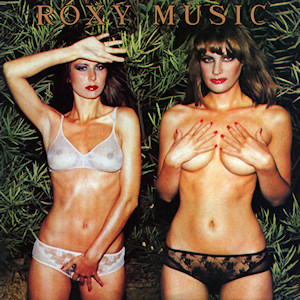
Case in point: The consensus pick for “Best” (TM) Roxy Music album, Country Life.

For being touted as a glam rock touchstone, there seems to be little here that isn’t a mere approximation of the hallowed heroes of Ferry’s time. The Eurotrash melodrama of “Bitter-Sweet” is better realized on Lou’s Berlin. The un-tethered guitar and sax soloing imitates the avant squall of Iggy’s Stooges. And let’s face it- just about everything else Ferry attempts are half-rate Bowie impersonations that find only varying levels of success. The halcyon days of the Big Three still dominate any conversation as to what this music was supposed to sound like in the early 70s.


...which is not all to say that Roxy Music is totally undeserving of a measure of their success. Andy Mackay and Phil Manzanera are actually very decent sidekicks, and their contributions largely keep Country Life from slipping out of memory altogether. Ferry has his moments too. Standout “A Really Good Time” is carried by a tidy melody and features lyrical phrasing that recalls Blonde on Blonde era Dylan. And not even the extraneous production effects on “Prairie Rose” can conceal the very best of Ferry’s vocal hooks.

But I’ve always suspected that Roxy Music’s greatest achievement was, above all else, being a band elevated by a personal aesthetic of more enduring significance than anything found in their music. See, Roxy Music made for substandard glam because they actually never were glam in the first place. Glam found danger in subverting concepts of gender and expectation and flirting with marginalized sexualities associated with drug freaks and street people. The music made sense, all jagged and ripped and fucked up interpretations of these glitter and garbage people who populated the decaying urban centers of the cultural world. Bryan Ferry didn’t belong there. His penchant for mugging and proggy, soft rock tendencies instead prophesized New Romantic (even so long before Punk begat New Wave.) He predicted a sub-genre of a sub-genre that is only distinguishable from its antecedents by... uhm... face stripes? Johnny Rotten should have hated Roxy Music every bit as much as the “over-the-top grandiose” sound of every other band in that incestuous scene.

In fact, Roxy’s supposedly profound effect on the early punk rock remains sonically nonexistent, and is more than likely a reinterpretation of the long-held love kids like Lil’ Lydon had for an icon to adolescents in the Isles. That Ferry was once a role model for countless young English punks surely wasn’t because he was almost the singer for King Crimson, but because he literally played the role of a model. The tuxedo fetish, the recurring cover-supermodels, the arty edges smoothed out by an oil-slick croon- this was James Bond… in a band! I have to imagine that this is exactly what teenaged British boys considered the objective and penultimate definition of “cool.”

And why not? I mean, the man really does wear the fucking hell out of a suit (just ask a member of Duran Duran!) But the fact remains that Roxy Music is perhaps the ultimate case of image validating a legacy after the fact, and the notion of this version of the band having that much influence, even if argued sincerely, is still not accurate. Roxy Music were no more key to the advancement of rock and roll than Tim Curry was to the sexual revolution. That Bryan Ferry is celebrated by so many reveals how revisionist we are in our appraisals of the things we just kind of seem to like, even in spite of our claims to taste.

Country Life by Roxy Music

Click here to read more.....

Monday, March 24, 2008

The Immortals: #99 - Curtis Mayfield

The soundtrack for which he remains best known is, today, lessened, marred by the trappings of a movie which demanded uncharacteristically unsubtle (read: cartoonishly racist) subject matter that both dates and devalues his excellent work. I don’t care who you are, making characters like Youngblood Priest and Eddie into anything less than an offensive caricatures and cinematized stereotypes was a superhuman task. That Mayfield made from that ludicrous material music so heartfelt and enduringly resonant as to nearly legitimize pure exploitation has to be a testament to both his talent and those songs (this was proven again when Superfly became the first film to make less money than its soundtrack.) Still, while a stigma may forever be attached to that heralded “classic,” Curtis settles the debate over which was truly his best record.

Mayfield showcases every ability here. An extraordinary producer, his reverbed, psychedelic vocals and inventive instrumentation influenced everyone from Sly Stone to Jimi Hendrix. The extra material on subsequent releases of Curtis includes several future mid-hits in demo form, and comparisons display his exceptional talent as an arranger and composer in both the elegance of his studio dynamism and the visceral punch of his hard-wah riffing. And of course, as an alternately uplifting and apocalyptic lyricist, his tracks plumbed the darkest depths of politics, race, drugs and urban ill-health while never descending so deep into the engrossing paranoia as to lose faith that we could not rise above it all again.

Unfortunately, like most artists in the early 70s retroactively noted for making “socially conscious” music, that recurring message of hope is too-often remembered as the whole story of what is, in actuality, a much more significant result from Mayfield’s musical endowments. His contemporaries in the modern sounds of soul, greats like Stevie Wonder, Marvin Gaye and the Gordy-led menagerie of Motown masters, made innovative records built from the gold-selling foundations of their socially conventional pop sounds. Remember, by this time previously negative associations were merely archaic reminders of 50s race-baiting, and the 60s had officially established whites as the prime (and profitable) audience for what was now the full-cultural force of rock and roll. Even as the nation descended into ever-worsening levels of sickness in the polarized era of civil rights, Vietnam and general socio-political upheaval, the radio became as safe as milk, and new orders of catchy numbers by clean-cut representatives from any popular genre could be made to order overnight from Hitsville, Wherever.

Mayfield, though of a similar mass-marketed pedigree in his back-catalogue with The Impressions, became the key figure in separating the homogenized racial legacies of co-opted rhythm and blues based musics. Unafraid to parlay in both the idioms of language and emotion found in real-life discussions of highly-charged issues, he determined that honest self expression couldn’t appeal to everyone all the time- that to create something great might well have to alienate some people in the process. Put another way, Curtis Mayfield boldly made black music that was really black again. And with that, good shit returned again to the AM dial.

"Sistas! Niggers! Whities! Jews! Crackers! Don't worry... If there's Hell below, we're all gonna go!"

One can quite likely trace a straight line from Mayfield’s first spoken words on the first cut off the first side of his solo debut to the sounds yet to come straight out of Compton, Detroit, and Brooklyn and everywhere else there was inequity in class, race or creed. Like the future works of those artists, Curtis provides a brutally authentic examination of not only its own time, but of some of our lasting American dualities. The message remains as simple as ever: we are a people rife with spiritual decay, yet together we're still capable of truly great things. Whether this amounts to a defense of gangsta rap or BET, or an attempt to reconcile any controversy associated with taking sides on our cultural divisions I’m really not sure. But what I am certain of now is that, in a towering and singular career, Curtis Mayfield once taught us that we simply couldn’t pretend we had achieved the harmony and prosperity that a unified people deserve. And he promises us that we have greatness still to earn.

Curtis by Curtis Mayfield

Click here to read more.....